
Follow Us


What does the evidence say?
According to the 2011 census, Australia is home to
476,000 Muslims, comprising 2.2% of the population[1].
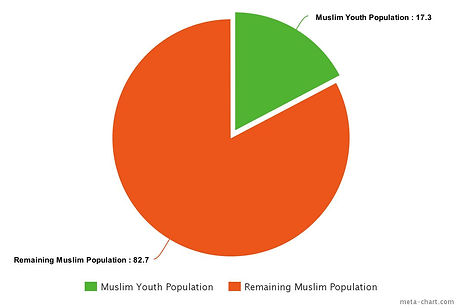
Of this number, 82,400 are considered youth, making up
17.3% of the Muslim Australian population.
This is in comparison to 13.3% youth for the total
Australian population[2].
The youth of today are our future - our leaders and
change-makers of tomorrow. It is vital that they can
articulate their vision and lead with a sense of belonging,
harmony and shared ownership of their societies and
communities. We can work together to ensure that
communities work side-by-side with government to foster this environment and culture.
This campaign was launched in direct response to the Federal Government’s Counter Terrorism Strategy (CTS) and its supplementing Countering Violent Extremism (CVE) Strategy 2015, adopted by the Council of Australian Governments (COAG), and the NSW Government’s CVE initiatives. The Federal CVE strategy seeks to address factors that make people vulnerable to extremist influences and radicalisation that may lead to violence. In particular, it emphasises building community cohesion and achieving effective communications that challenge extremist messages and support alternatives[3].
Indeed the overarching counter terrorism strategy acknowledges that the grooming of young people online is one of several vital factors responsible for radicalising susceptible individuals[4], a fact supported by research on terrorism and counter-radicalisation elsewhere[5] [6] [7]. The Federal Government is currently working with social media and tech companies such as Google, Facebook and Twitter to remove radical material as it arises[8].
The NSW Government’s CVE strategy, in addition to supporting that adopted by COAG, has placed an emphasis on identifying and diverting susceptible children and youth in their schools through a package aimed at equipping teachers and school counsellors with additional training and support [9].
We welcome and support the Governments’ plans and initiatives to counter violent extremism through building cohesion. And given that young Australians are highly connected to the internet [10], an effort to mitigate the risks presented by the digital arena is also encouraged.
The gaps
The removal of offending material forms an integral part of countering extremist messaging. However the vastness of the world wide web combined with media-savvy terror groups means that without an expanded communications strategy to both replace the content and counter their narratives, our government could forever be on the back foot in the digital space. While the Federal Government’s Counter Terrorism Coordinator acknowledged that we need to be better at challenging the narrative of violent extremists[11], there is no comprehensive plan to do so in the digital arena.
We believe that the resources at the Government’s disposal should be invested in devising a comprehensive online and communications strategy that goes beyond removal, but one that reinforces and amplifies the myriad of voices by Muslims themselves, particularly young Muslims who challenge radical narratives in favour of narratives of cohesion, harmony and embracing diversity and difference [12].
More importantly, the Government’s plans and strategies rely on increasing community cohesion, harmony, inclusion and belonging. It is crucial that in delivering this strategy it does not accidentally undermine this essential goal.
It is doubly critical that the plan is delivered in such a way that acknowledges and respects the fact that Muslim youth and the communities and groups that represent them deserve a seat at the table when it comes to these policies, and are not treated in a way that acknowledges them only as susceptible, vulnerable or as dormant latent threats.
This means fully addressing the challenges that Muslim youth face. 55% of Muslims said they experienced racism and prejudice in their places of education (school, TAFE, university etc.) compared to the national average of 17%[13]. This goes up to 62% when it comes to the workplace, compared to 18% nationally[14]. There has also been rising anti-Muslim sentiment recently represented and legitimated in our political institutions in the last federal election.
This campaign advocates to deepen the objectives of the government’s policies to adequately address the issues of radicalisation in the digital space and social hindrances such as unemployment and increased job-market inaccessibility[15], racism and prejudice, and perceived political grievances.
We believe that prevention and responsiveness to these issues can be replaced and better mitigated by a socially cohesive community that reflects harmony, belonging, respect and diversity. MY Voice is ready to utilise its resources and coalitions to work with the Government to achieve these objectives in a manner that is best practice, evidence-based and underpinned by universal values.
References
[1] See Reflecting a Nation: Stories from the 2011 Census, ABS http://www.abs.gov.au/ausstats/abs@.nsf/lookup/2071.0main+features902012-2013
[2] Australian Muslims A DEMOGRAPHIC, SOCIAL AND ECONOMIC PROFILE OF MUSLIMS IN AUSTRALIA, University of South Australia, 2015 https://www.unisa.edu.au/Global/EASS/MnM/Publications/Australian_Muslims_Report_2015.pdf
[3] See CVE strategy factsheet https://www.livingsafetogether.gov.au/aboutus/Documents/CVEStrategyFactSheet.pdf
[4] See Counter Terrorism Strategy 2015 factsheet https://www.nationalsecurity.gov.au/Media-and-publications/Publications/Documents/Australias-Counter-Terrorism-Strategy-2015.pdf
[5]UNESCO 2016, Social media and youth radicalization in digital age 2016 http://www.unesco.org/new/fileadmin/MULTIMEDIA/HQ/CI/CI/pdf/news/background_social_media_radicalization.pdf
[6] Bizina & Gray 2015, Radicalization of Youth as a Growing Concern for Counter-Terrorism Policy, Global Security Studies http://www.globalsecuritystudies.com/Bizina%20Youth-AG.pdf
[7] Department of Homeland Securit, Science and Technology Directorate 2009, http://www.homelandsecurity.org/docs/reports/Internet_Radicalization.pdf
[8] Counter terrorism experts meet in Canberra led by Prime Minister Malcolm Turnbull to fight extremism, NewsCorp Australia, 2015 http://www.couriermail.com.au/news/national/counter-terrorism-experts-meet-in-canberra-led-by-prime-minister-malcolm-turnbull-to-fight-extremism/news-story/5d681c5e111bffa97ab1e899504aa25c
[9] See NSW CVE factsheet https://www.nsw.gov.au/sites/default/files/news/countering_violent_extremism_in_nsw_fact_sheet.pdf
[10] See Australians’ Digital Lives 2013-2015, ACMA http://www.acma.gov.au/~/media/Research%20and%20Analysis/Research/pdf/Australians%20digital%20livesFinal%20pdf.pdf
[11] Counter terrorism experts meet in Canberra led by Prime Minister Malcolm Turnbull to fight extremism, NewsCorp Australia, 2015
[12] Australian Strategic Policy Institute, Fighting fire with fire: Target audience responses to online anti-violence campaigns, 2015 https://www.aspi.org.au/publications/fighting-fire-with-fire-target-audience-responses-to-online-anti-violence-campaigns
[13] K Dunn, R Atie, V Mapedzahama, M Ozalp, AF Aydogan 2015, The Resilience and Ordinariness of Australian Muslims Report, https://www.uws.edu.au/__data/assets/pdf_file/0008/988793/12441_text_challenging_racism_WEB.pdf
[14] Ibid.
[15] Australian Muslims A DEMOGRAPHIC, SOCIAL AND ECONOMIC PROFILE OF MUSLIMS IN AUSTRALIA 2015, University of South Australia 2015 https://www.unisa.edu.au/Global/EASS/MnM/Publications/Australian_Muslims_Report_2015.pdf